For junk removal in a Dubai tower, ask building management how to reserve the service lift before fixing the collection time. Confirm the permitted date and window, required documents, protection rules, access point and loading arrangements in writing. Then send those details to the removal provider. The building controls the lift; a collection booking does not create building permission.
Every property can operate differently, even within the same area or management group. This guide explains the questions and sequence to use, but it does not claim that every Dubai building requires the same form, deposit, notice period or move-out hours.
Start with the building, not the collection slot
Contact reception, security, the concierge, facilities team, landlord or management channel used by your property. Ask who authorises removal of bulky items and who controls the service lift calendar. A verbal answer from someone who does not manage the booking may not be enough on collection day.
Describe the task accurately: removal of unwanted furniture, appliances, boxes or a larger clearance. State the unit, floor and approximate item list. Ask whether this is treated as a move, a delivery, contractor access or a separate bulky-item collection category.
Ask for the current process in writing
Request the current instructions rather than relying on a previous move or a neighbour’s experience. Procedures, access points and available windows can change. Save the confirmation and provide it to the person who will meet the team.
Do not invent a form requirement or promise that a particular document will be accepted. If management requests information you do not yet have, ask what exact detail is needed and obtain it from the provider before submitting anything.
What to confirm about the lift reservation
Confirm the date, start and end of the access window, the lift or entrance to use, and where the attending vehicle may load. Ask how early the provider may arrive and what happens if the previous booking overruns. A narrow lift window should be treated as a real scheduling constraint.
Ask whether the lift is dedicated to the job during that window or remains shared. Confirm where keys, access cards or lift controls are collected and who can release them. Identify a building contact for the day, without assuming that reception can resolve every issue immediately.
Dimensions and capacity matter
Obtain the clear door opening and usable car dimensions if management can provide them. Ask about rated capacity and any restrictions on long, tall or heavy items. Do not estimate capacity from the appearance of the lift or treat published dimensions as permission to load it in a particular way.
For bulky furniture, share item measurements and photographs with the residential junk removal service. The team still needs to assess corners, doorways and handling space outside the lift. A large car does not help if the lobby turn is too tight.
Documents and information management may request
Management may ask for resident identification, tenancy or ownership details, a move request, contractor information, vehicle details, an item list or other records. Requirements vary. Ask for the exact current checklist and the approved method of submission.
Provide only accurate information. If a vehicle registration, staff list or company document is required, obtain it from the provider rather than guessing. Check when the information must be submitted and whether approval is confirmed separately from receipt.
Distinguish an NOC question from a lift booking
A no-objection document, contractor approval and lift reservation are not necessarily the same thing. Ask management which approvals apply to this specific removal. Do not use a generic online answer to decide that your building does or does not require one.
Keep the scope consistent across every request. If the item list grows from one sofa to a full apartment clearance, tell management and the provider. An approval issued for a smaller task may not describe the new activity accurately.
Protection rules for common areas
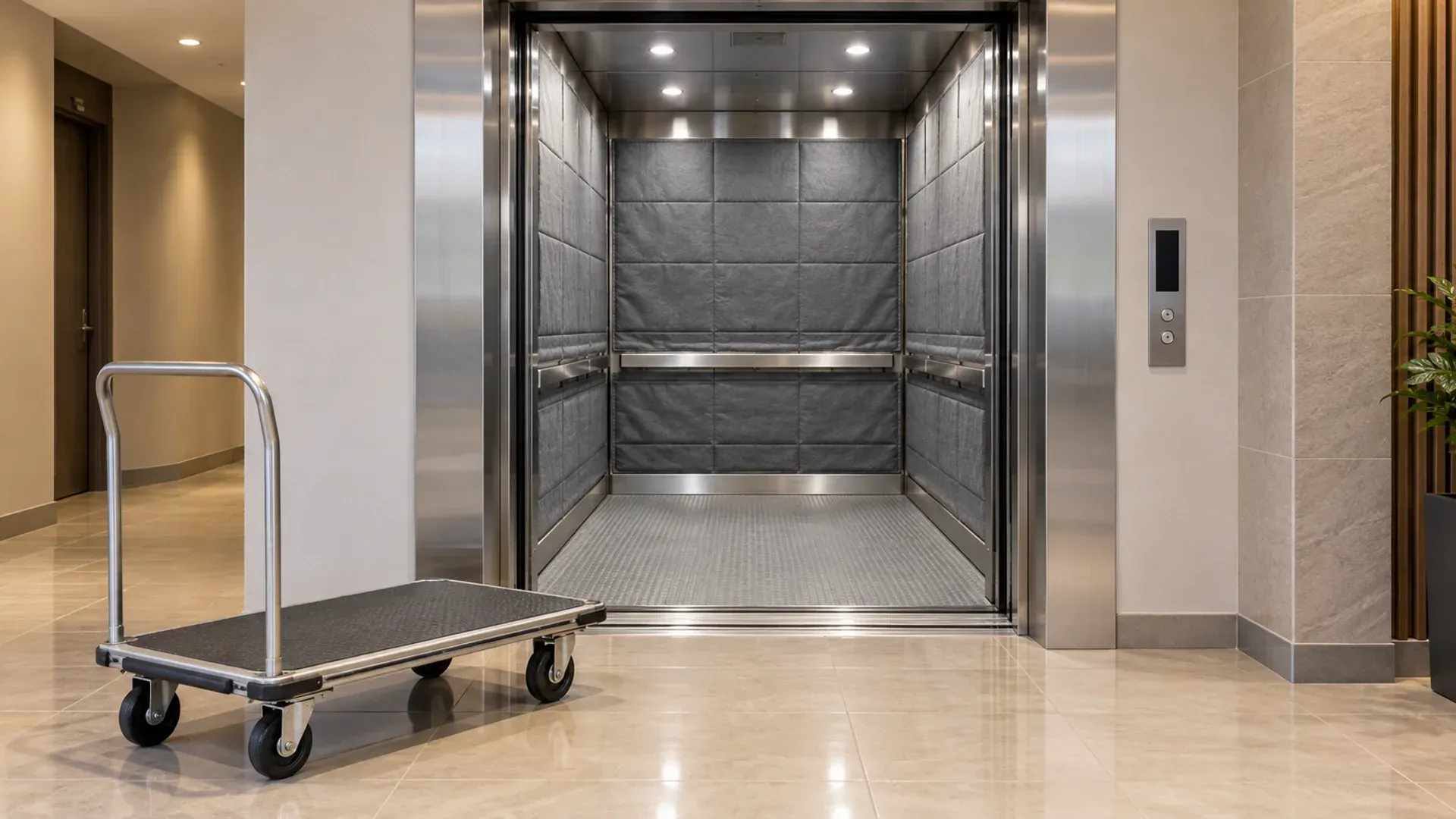
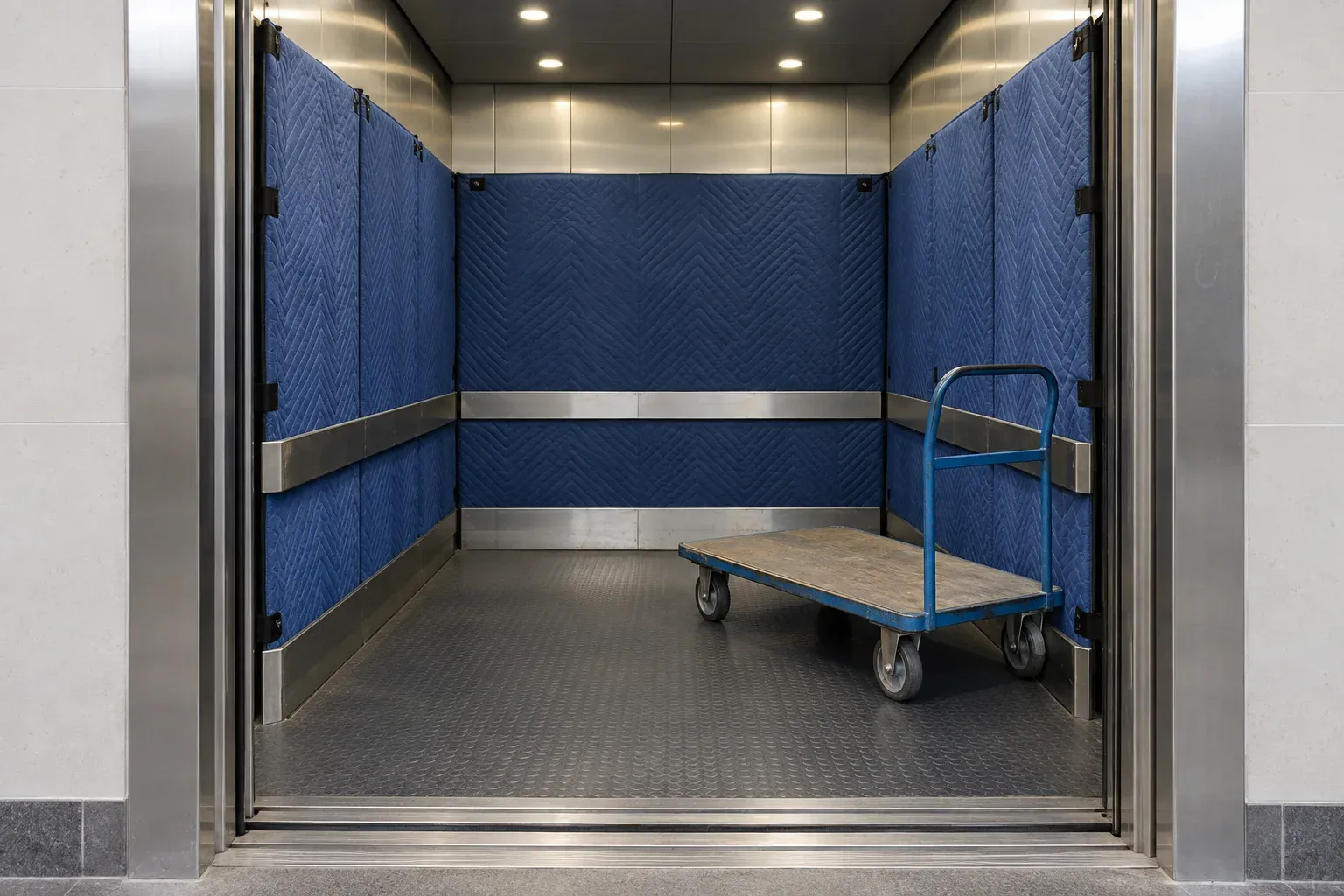
Ask whether the building installs lift padding or expects the provider or resident to arrange it. Confirm requirements for floor runners, corner guards, loading-bay protection and waste handling. Find out when protection may be installed and who must remove it.
Do not attach materials to walls, doors, sensors or fire equipment without approval. Keep corridors and exits clear. The objective is to protect the property while preserving safe access for residents and building operations.
Photograph the access route
Take wide images of the apartment entrance, corridor turns, fire doors, service-lift lobby, lift threshold, ground-floor exit and loading point. Avoid photographing residents, access codes, unit numbers or security screens. The images should explain geometry, not expose private building information.
Send the route photographs with the item list. Point out steps, ramps, long carries and doors that require staff access. This helps the provider plan equipment and timing without claiming that any particular handling method is guaranteed.
Coordinate the building window with the removal booking
Do not confirm one side and assume the other will adapt. Obtain available building windows, ask the provider which can be served, and then secure matching confirmations. If either confirmation is still conditional, state that clearly.
Allow for check-in, access-card collection, lift preparation and movement from the apartment to the loading point. Do not interpret the lift window as pure loading time. Ask both parties what punctuality and completion rules apply.
Plan for changes without inventing guarantees
Ask management how amendments or delays are handled. Ask the provider what notice they need if the building changes the slot. Record contact numbers for the resident representative, provider and building desk, but do not promise that any party can extend the window.
If a same-day request is involved, the urgent collection guide explains why access readiness matters. Provider availability alone does not create a service-lift reservation.
Loading access is part of the same plan
Confirm the approved vehicle entrance, loading bay or collection point and any height, time or stopping restrictions supplied by management. Ask how the vehicle checks in and whether security needs advance details. A lift booking that ends at a lobby with no approved loading route is incomplete.
Explain any distance between the service exit and loading point. Note ramps, kerbs, gates and changes of level. Do not direct a vehicle to stop illegally or block emergency access in order to shorten the carry.
Decide who will attend
Choose a representative who can enter the unit, identify every item, show the approved route and contact management. Give them the written scope and building confirmation. A remote phone contact is useful, but someone on site still needs authority to answer ordinary access questions.
If a landlord, tenant and property manager are all involved, settle who can authorise removal of each item before the visit. Building approval controls access; it does not prove ownership of the contents.
Prepare the unit and item list
Create one complete list of what is leaving and photograph it. Mark items that remain, especially when similar furniture or appliances are nearby. Remove personal belongings from drawers and loose cushions where safe.
Tell the provider about unusually heavy, fragile, built-in, connected or damaged items. A service-lift booking does not answer whether an appliance is disconnected or whether furniture requires dismantling. Those are separate preparation questions.
Avoid blocking the corridor early
Keep items inside the unit until the agreed movement begins unless management explicitly instructs otherwise. Placing furniture in a shared corridor can obstruct neighbours and emergency routes. Sequence the work so the route is clear and the lift is ready before items enter common areas.
Ask where packaging or small loose material should be contained. Do not use shared waste rooms or building bins for bulky items unless management has expressly confirmed that route.
If the item does not fit the lift
Measure and photograph the item and lift route before collection day. For a difficult sofa, use the sofa doorway assessment to document sectional connections and turning space. The provider can then consider approved dismantling or another route.
Do not switch automatically to stairs, a passenger lift, balcony or emergency exit. Each alternative requires building approval and a safe job-specific assessment. If no approved route exists, resolve that before the team arrives.
Stairs are not a simple fallback
Give the exact floor and images of landings, turns and doors. Ask whether stair movement is permitted and whether the provider accepts it. Never assume that a stair carry is included because the lift is unavailable.
The same applies when a booked lift is out of service. Report the change and ask both parties for a revised plan. Pressuring the attending team to use an unapproved route creates risk and may breach building instructions.
A complete booking message
Send the provider the item list, photographs, unit floor, lift dimensions if supplied, approved access window, check-in point, loading instructions and building contact. State whether protection is installed by management and identify any documents still pending.
Ask for confirmation that the described job can be planned within the approved conditions. If pricing or scope depends on access, ensure the quoted job reflects the information supplied. Keep a copy for the representative attending.
Send management only the provider details and documents it requests through its approved channel. Do not include unrelated personal information. Confirm approval, not merely submission, before relying on the booking.
On the collection day
Have the unit and item list ready. Confirm the lift or building desk procedure at the agreed time. Keep access cards controlled and follow instructions for padding, doors and loading. Report any changed item, damaged route or delayed access immediately.
Check shared areas after the movement and follow the building’s sign-out process. Return access items and ensure temporary protection is handled by the responsible party. Keep any completion record management provides.
If the booking cannot proceed, establish why before rescheduling: provider timing, missing building approval, unavailable lift, item preparation or an unsuitable route. Fix the actual dependency rather than creating another appointment with the same gap.
Keep neighbours and shared operations in mind
Ask whether another move, delivery or maintenance task shares the service area. Keep doors, fire routes and lobbies usable except during the controlled movement permitted by management. Do not leave trolleys, dismantled furniture or loose packaging unattended in common space.
Where noise or repeated lift trips may affect residents, follow the building's stated hours and conduct rules. The booking window is permission to perform the described task under those rules, not exclusive control of every corridor. A representative who understands the route can pause movement when neighbours need safe passage.
Review the result before everyone leaves
Check the unit, route and loading point against the item list. Confirm that nothing intended to remain was taken and that no agreed item was missed. Report visible damage through the building's normal channel rather than attempting an improvised repair in a shared area.
Return keys or cards, complete sign-out and retain the approval for your records. If more material remains, describe it as a new scope and arrange another approved window instead of moving it into the corridor after the booking ends.
Common service-lift booking mistakes
Frequent errors include treating a WhatsApp acknowledgement as approval, booking a removal before checking the building calendar, omitting the loading bay, giving an incomplete item list and assuming the provider will arrange resident permissions.
Other problems arise when a resident quotes rules from another tower, overlooks a required check-in process, or expects a booking to extend automatically. The cure is simple: one written building instruction set, one accurate job description and matching confirmed times.
FAQs about service lifts for junk removal
Does the removal company book the service lift for me?
Do not assume so. The resident, tenant, owner or property representative often has to use the building’s own process. Ask management who may submit the request, then tell the provider what has been approved.
Can the passenger lift be used if the service lift is busy?
Only if building management permits it for the described items and conditions. Do not decide this at the lift lobby. Obtain approval and share any protection requirements before the visit.
How far in advance should I reserve the lift?
Ask your building directly. Notice periods and availability vary, and a general number could be wrong for your property. Check the current calendar before agreeing a collection time.
What happens if the collection runs past the lift window?
Ask management and the provider about their procedures before the day. Do not assume an extension is available. A complete item list, prepared unit and clear loading route reduce avoidable delay.